
Blog
From Clay to Fire: 600 Years of Handmade Pottery from Huaning, Yunnan

From Clay to Fire: The Making of Handmade Pottery in Huaning, Yunnan
In the mountains of Huaning, Yunnan, a ceramic tradition has quietly continued for more than 600 years.
Long before industrial molds and mass production, pottery here was shaped by hand, guided by experience, and completed by fire.
These images capture a single journey — from raw clay to finished ceramic — following the same process that has been passed down through generations.
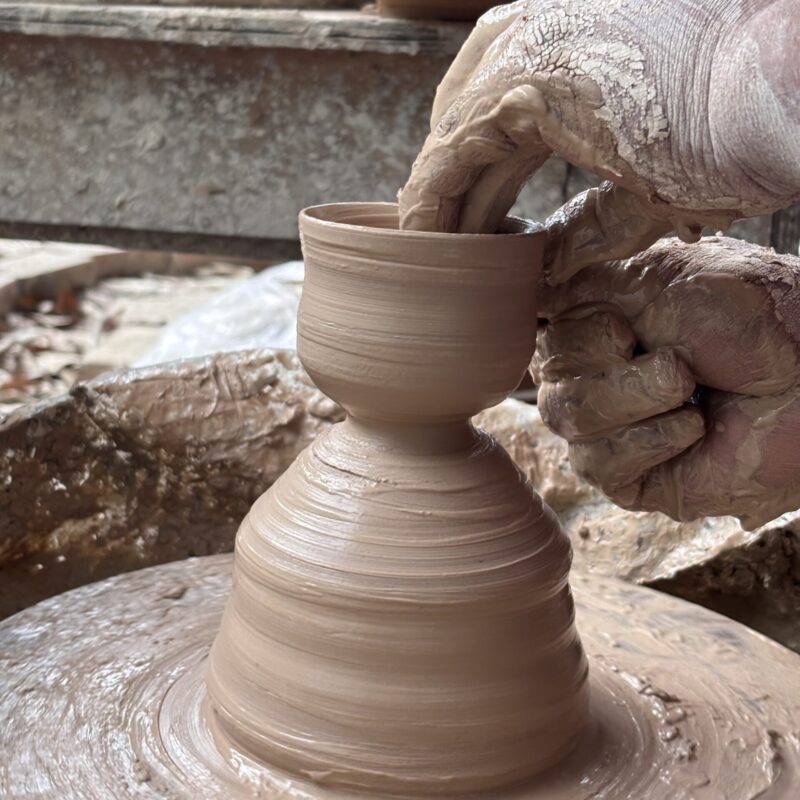
Step 1: Shaping the Raw Clay by Hand
The first stage begins with raw clay on the wheel.
There are no molds. No machines controlling the form.
Only hands.
As the wheel turns, the clay slowly rises, guided by pressure, touch, and memory. Every line on the surface records a movement. Every curve is shaped in real time.
At this stage, the vessel is still fragile — a raw clay body, soft and unfinished, yet already unique.
No two pieces can ever be exactly the same.
This is the foundation of handmade pottery:
once formed, it cannot be replicated.
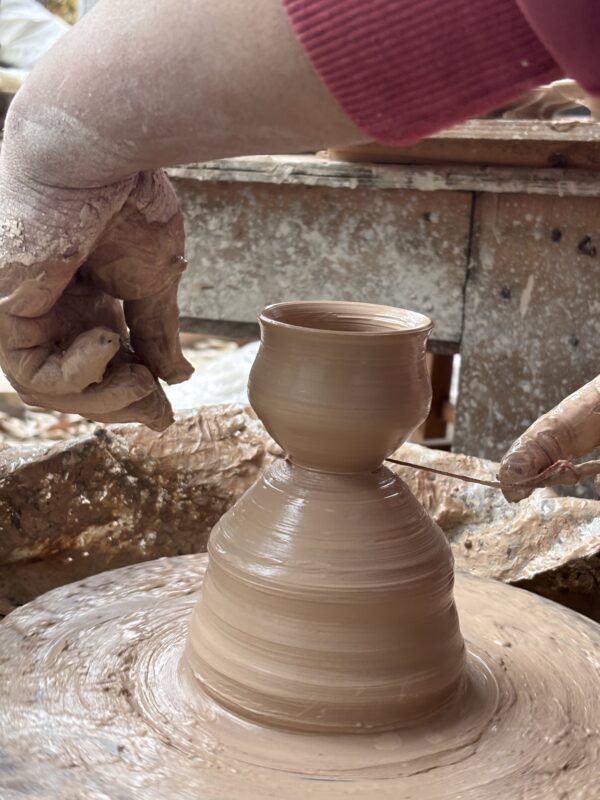
Step 2: Refining the Form Before Fire
As the form develops, the potter carefully adjusts thickness, balance, and proportion.
Even small changes in pressure can alter the final result.
This stage demands patience and restraint.
Too fast, and the clay collapses.
Too slow, and the form loses its vitality.
What you see here is not perfection — it is control within imperfection, a defining characteristic of traditional Chinese ceramics.
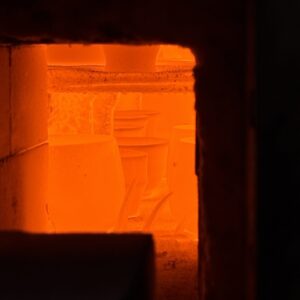
AirpStep 3: Firing at 1300°C — Where Clay Becomes Ceramiclane
The final transformation happens inside the kiln.
At temperatures reaching 1300°C, raw clay undergoes irreversible change.
The body hardens. The structure stabilizes. The material becomes ceramic.
Fire is not merely a tool — it is a collaborator.
No two firings are ever identical. Variations in flame, ash, and temperature create subtle differences in texture and tone. This unpredictability is not avoided; it is embraced.
Once fired, the piece is complete.
There is no return, no correction, no second chance.
A Living Ceramic Heritage from China. Why Handmade Pottery Still Matters
Huaning pottery is not a revived trend — it is a living heritage.
For over six centuries, this region of Yunnan has been known for its durable, high-temperature ceramics, crafted entirely by hand. The techniques used today remain deeply connected to their historical roots, refined through experience rather than automation.
Each finished piece carries:
- The mark of the maker
- The memory of the wheel
- The trace of fire
It is not simply a ceramic object — it is a record of time, skill, and tradition.
In a world dominated by identical products, handmade ceramics offer something rare:
authentic difference.
Every cup, bowl, or vessel tells its own story — not through decoration, but through form, texture, and material honesty.
This is why handmade pottery from Huaning continues to resonate across cultures:
because it reflects the human touch, preserved through centuries.