
Blog

From Raw Clay to Finished Cup: The Handmade Ceramic Process
Introduction
This handmade ceramic cup begins its life as raw clay.
Before any glaze, before fire, it exists in its most honest form — shaped by hand, imperfect, and full of potential.
Unlike mass-produced ceramics, every step in handmade pottery leaves a visible trace.
This transformation is not hidden. It is the story.
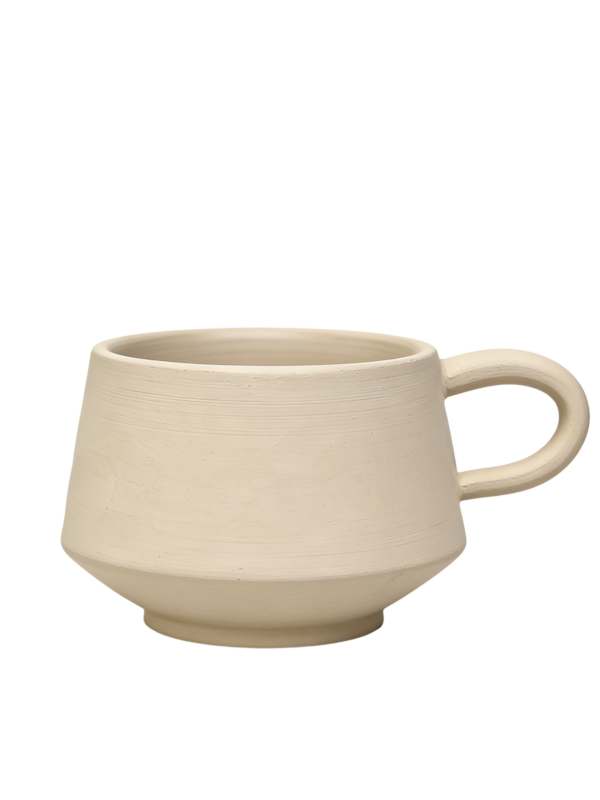
Step 1: Shaping the Raw Clay
The first image shows the cup in its unglazed state.
At this stage, the surface is matte, soft in color, and marked by the movement of the hands that shaped it.
Small lines, subtle curves, and natural irregularities are not flaws —
they are records of the making process.
No molds. No duplication.
Each cup begins as a singular form.
Step 2: Glazing and Firing
After shaping and drying, the cup is glazed and fired in a kiln.
Fire plays a decisive role.
Temperature, minerals in the glaze, and timing all interact in ways that can never be fully controlled.
The second image shows the same cup after glazing and firing.
The surface has transformed — deeper tones, flowing textures, and a depth that only fire can create.
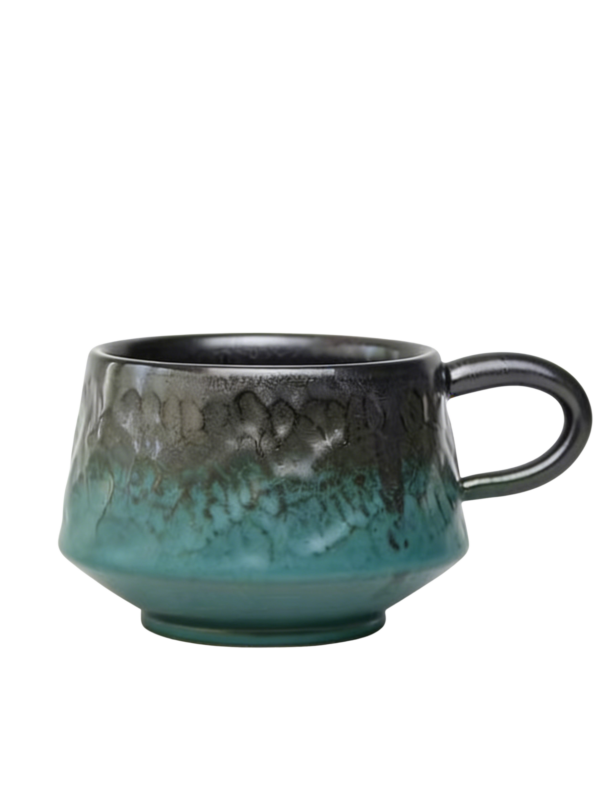
Before and After: One Cup, Two Moments
These are not two different cups.
They are the same piece, captured at two moments in time.
From raw clay to finished ceramic,
the transformation is irreversible — and unrepeatable.
This is why handmade ceramics are never identical.
Each firing produces a result that exists only once.
A Tradition Shaped by Time
This process is rooted in centuries of ceramic craftsmanship.
For over 600 years, Chinese ceramic traditions have embraced the dialogue between hand, clay, and fire.
What remains today is not just an object,
but a continuation of that heritage — shaped slowly, intentionally, and with respect for the material.
One of a Kind
No two handmade ceramic cups are ever the same.
This cup cannot be reproduced exactly — not even by the same hands.
It is not designed for speed or perfection,
but for presence, texture, and quiet beauty.
Conclusion
From raw clay to finished cup,
this piece carries the marks of its making.
It is not just a ceramic cup —
it is a moment of transformation, captured in clay and fire.